How to Open a Profitable Ice Cream Shop: What It Really Takes to Make Money
Ice cream is the easy part. Making money with it is the hard part.
I spent several years training in Italy in artisan gelato—learning formulation, recipe balancing, texture, freezing and production. That taught me how to make great gelato.
Building an ice cream shop taught me something else entirely.
I developed my first concept from the ground up: equipment, recipes, menu, branding, production, staff training, launch and day-to-day operation.
We invested approximately $75,000. By Year 2, the concept was generating approximately $180,000 in annual profit.
What made it work wasn't one spectacular flavor or one expensive machine. It was understanding how the product, equipment, labor, menu, pricing and guest experience affected one another.
If you're thinking about opening an ice cream or gelato shop, this is where I would start.
1. Figure Out How the Shop Makes Money Before You Buy a Machine
Don't start by shopping for equipment.
Start by understanding how the shop needs to make money.
How many transactions do you need each day? What will your average check be? How much volume can your location realistically generate? Are you selling soft serve, scooped gelato or both? Will production happen in-house? How much refrigeration and storage will that menu require?
Those answers should determine your equipment—not the other way around.
Our shop was at street level inside a luxury hotel lobby. Our opening setup included two soft-serve machines and a gelato display, but those machines were purchased to execute an operation we had already designed.
And your ice cream shop startup cost isn't just equipment.
It's refrigeration, production space, smallwares, packaging, signage, branding, opening inventory, training, marketing and working capital.
A machine is an investment only if your sales can justify it. Otherwise, it's an expensive piece of stainless steel.
2. Understand Overrun. You're Selling Air Too.
If you're opening an ice cream business, you need to understand overrun.
Overrun is the air incorporated into a frozen product during freezing. It affects texture and density—but commercially, it also affects yield and portion cost.
Artisan gelato typically has lower overrun and a denser texture. Soft serve has different aeration, freezing and dispensing characteristics.
Neither is automatically more profitable.
What matters is understanding what your formula and equipment are designed to produce.
I developed our soft-serve formulas specifically for our machines and calibrated the machines to those formulas.
Change the formula without understanding the machine—or change the machine settings without understanding the formula—and you can change texture, structure, yield and how quickly the product melts.
Your recipe and your machine are one system.
If you don't understand that system, you're not only risking the quality of the ice cream.
You're risking consistency and margin.
3. Four Flavors Were Enough to Open
Our first season launched with four soft-serve flavors:
Vanilla Bean · Strawberry Cheesecake · Chocolate Obsession · Salted Caramel
After all that development, guess what sold the most?
Vanilla Bean and Chocolate.
Simple.
That's one of the best lessons the business taught me.
Chefs love innovation. Customers love delicious.
Those aren't always the same thing.
So instead of forcing all the creativity into the base flavors, I put the WOW somewhere else.
We created whimsical sundaes with cotton candy, brownies, mini cookies and playful toppings. The products were intentionally visual and Instagrammable.
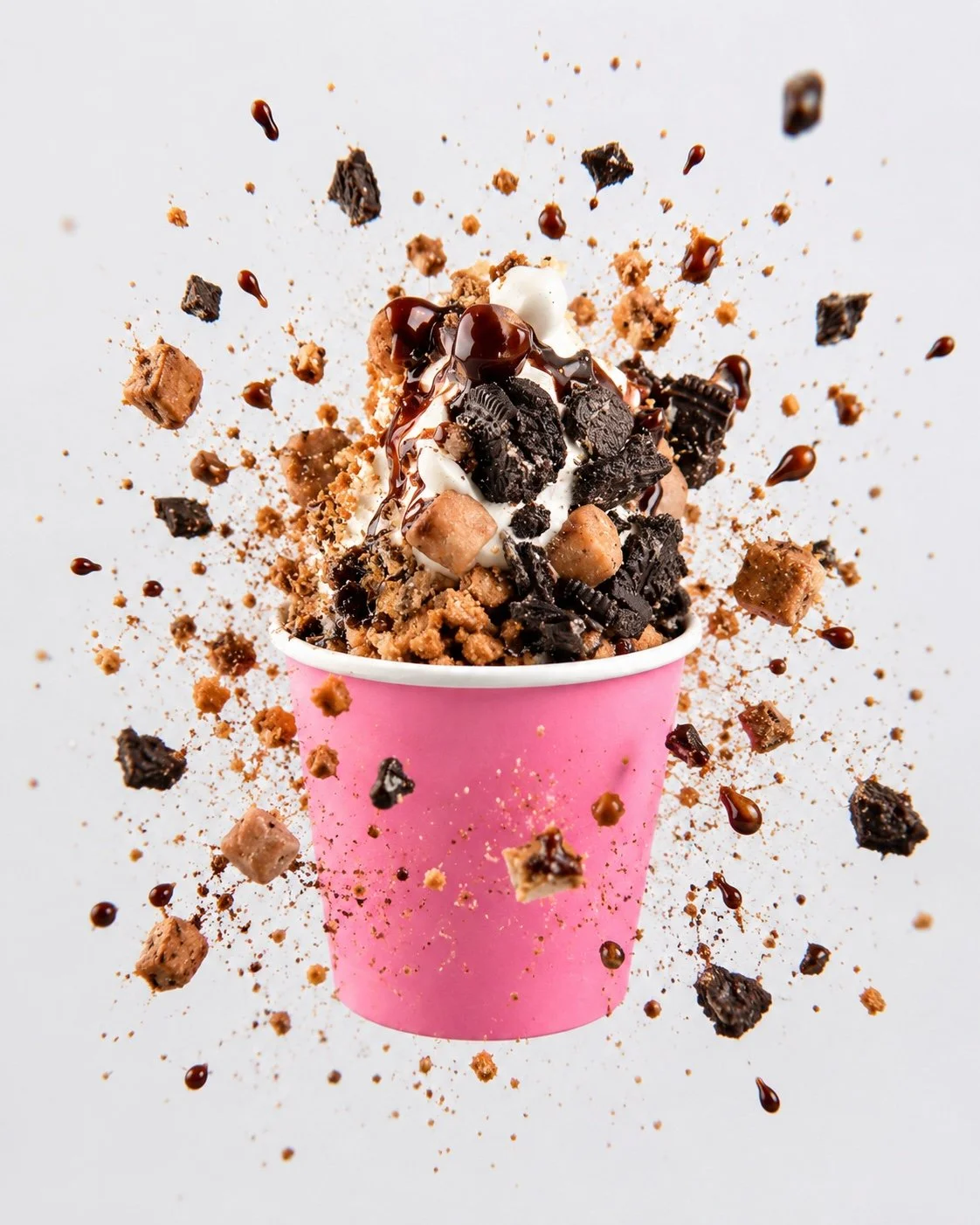
We had giant ice cream cones outside, branded cups and sleeves, and exterior branding that made the shop visible from the street.
The flavors brought familiarity. The experience created the memory.
You don't need twenty flavors on opening day.
You need enough choice to make people happy, enough volume to make money, and an operation your team can execute beautifully.
4. Give Them a Reason to Keep Coming Back
By Year 2, we expanded with six scooped gelato and sorbet flavors, including Birthday Cake, Upside-Down Pineapple Cake, Cinnamon Bun Gelato and Watermelon Tajín Sorbet.
We weren't adding flavors just to make the menu bigger.
We were giving people a reason to come back.
Don't remove Vanilla Bean because you're bored with it. If customers love it, let it make money.
Then give them something they haven't tried yet.
A strong menu needs both familiarity and discovery.
Keep the products people return for. Introduce enough seasonal flavors, limited releases or signature sundaes to keep the concept moving.
Repeat business isn't an accident. You design for it.
5. A $10 Sundae Isn't Necessarily a Profitable Sundae
Our products generally sold for $6 to $10.
Ice cream can look incredibly profitable when you calculate only the ingredients in the cup.
That's not your real cost.
The real cost includes the cup, cone, spoon, sleeve, sauce, toppings, inclusions, labor, waste, utilities, machine maintenance and every portion that was a little too generous.
Then there is overrun.
Then there is production labor.
Then there is everything you prepared and didn't sell.
A handful of extra toppings doesn't look expensive.
Multiply it by thousands of guests.
Now it matters.
This is also why product margin and actual business profit are not the same thing. A menu item can have an excellent food cost while the operation around it loses money.
Know what each item costs to produce.
Know what it costs to serve.
Know how much you're actually keeping.
Revenue tells you what you sold. Profit tells you whether the idea worked.
6. Don't Design a Menu Your Kitchen Can't Produce
Everything we served was made in-house.
Typically, one or two cooks handled production while seasonal scoopers handled guest service.
That meant every new idea had consequences.
Another gelato flavor means another batch. Another sundae can mean another sauce, brownie, cookie, garnish, container and prep list.
The guest sees ten seconds of assembly.
The kitchen sees everything required to make those ten seconds possible.
So before adding something to a menu, I ask three questions:
Is it delicious?
Can we execute it consistently?
Does it make financial sense?
If the answer isn't yes three times, it probably doesn't belong.
7. Don't Build a Business That Only Makes Money When It's 80 Degrees Outside
Our concept was seasonal, operating primarily from spring through fall.
Although Chicago taught me something funny: it could be raining and people still wanted ice cream.
But that's not a business plan.
If you intend to operate through colder months, you need products capable of supporting revenue when frozen desserts aren't at peak demand.
That might mean affogato, coffee, hot chocolate, a warm brownie or cookie with gelato, seasonal desserts or packaged products to take home.
Not all of them.
Only the ones your operation can execute profitably.
The goal isn't to make your menu bigger. It's to make your business less dependent on the thermometer.
8. Consistency Is Part of What You're Selling
A great recipe isn't enough.
It needs a documented formula. The machine needs the correct calibration. Portions and presentation need standards. Cleaning procedures need standards. Employees need product knowledge. Food-allergy questions need to be handled correctly and taken seriously.
And training doesn't end on opening day.
The guest doesn't know who was trained on opening day and who started last Tuesday. They expect the same experience from both.
Concepts should evolve. Menus should change. Teams will change.
But understand why something works before you change it.
Consistency isn't about freezing a concept in time.
It's about protecting what made it successful while allowing the business to evolve.
A successful opening proves the concept can work. Consistency is what proves it can last.
And Now I'm Doing It Again
Today, I'm developing another ice cream and gelato concept at a luxury hotel in the city.
The equipment is different. The menu will be different. But I'm applying the same lessons.
How much volume can we realistically produce?
What will people actually buy?
Which products deserve permanent space on the menu?
What will make someone come back?
Where is complexity adding value—and where is it simply adding cost?
Does the equipment support the formulas?
Can the team execute the menu consistently?
And ultimately: does the business make sense?
The first concept grew from an approximately $75,000 investment to $180,000 in annual profit by Year 2.
And after the creative gelato flavors, elaborate sundaes, cotton candy, cookies, brownies and giant ice cream cones outside, one of our biggest sellers was still Vanilla Bean.
There is definitely a lesson in that.
A profitable ice cream shop doesn't need to be complicated.
It needs to be delicious, memorable, operationally disciplined—and designed to make money.
The second time, you don't start from zero.
You start from experience.
Thinking About Opening an Ice Cream or Gelato Shop?
Before you spend money on equipment, build a menu or commit to a production model, getting those decisions right can prevent expensive mistakes later.
I work with hospitality groups, entrepreneurs and food businesses on pastry and frozen-dessert concept development, menu strategy, equipment planning, recipe development, production systems, training and launch.
Explore Pastry Consulting →
